
Learn with CCC
Practical insights, fresh research, relevant case studies, and hard-won lessons from the work we do with leaders and organizations
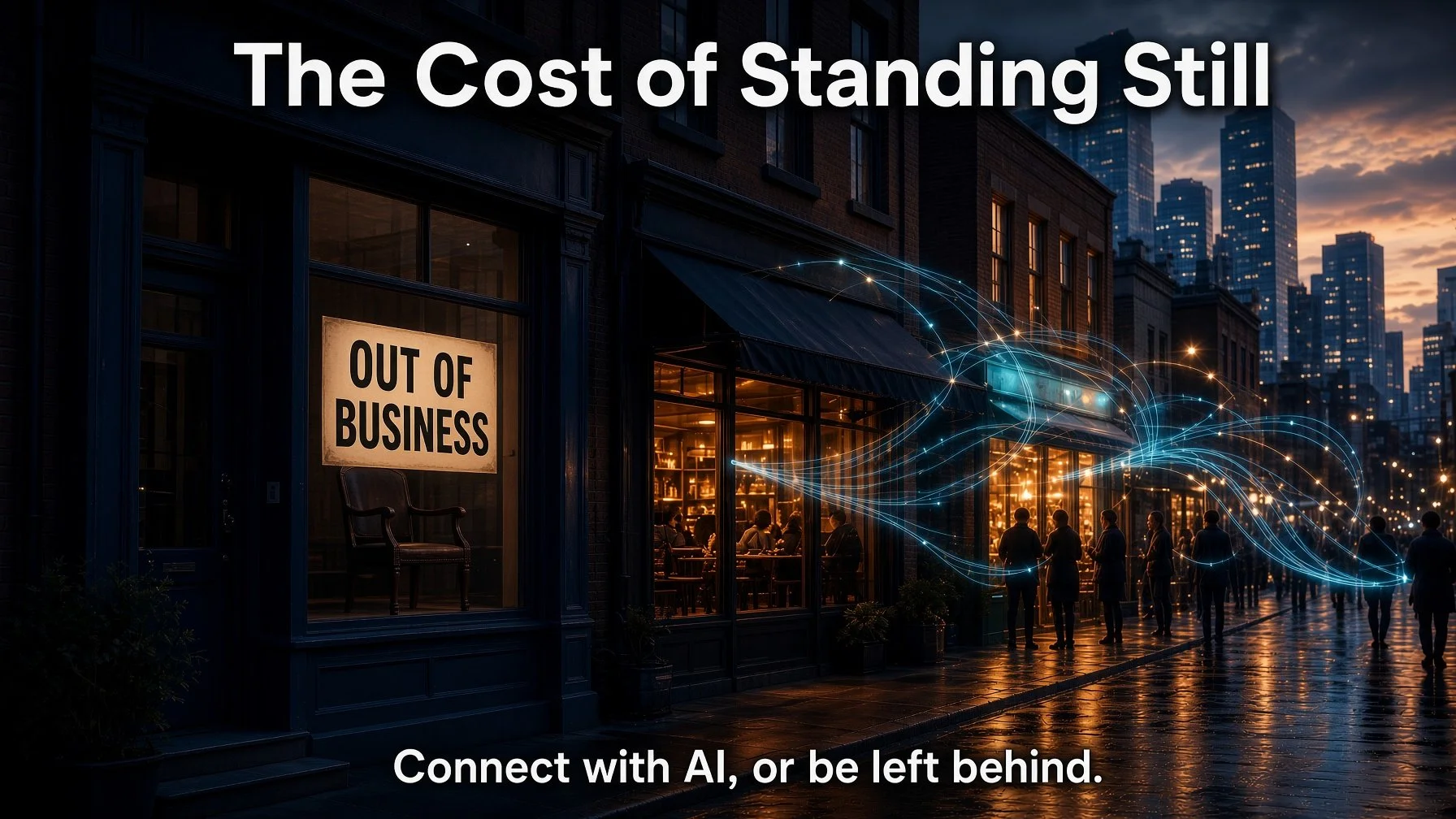
The Cost of Standing Still
Standing still feels safe until customers quietly choose a different path. This article examines the recurring historical pattern in which new channels of commerce are first dismissed, then rapidly adopted—leaving unprepared businesses behind—and shows how the same dynamic is now unfolding as customers begin discovering and transacting through AI conversations. Drawing on current traffic data and market forecasts, it argues that the real cost of inaction is the gradual migration of volume toward whoever makes the interaction easiest, and that the practical response is to evaluate and upgrade the underlying flows of information, product, and service so the business remains reachable as behavior continues to change.
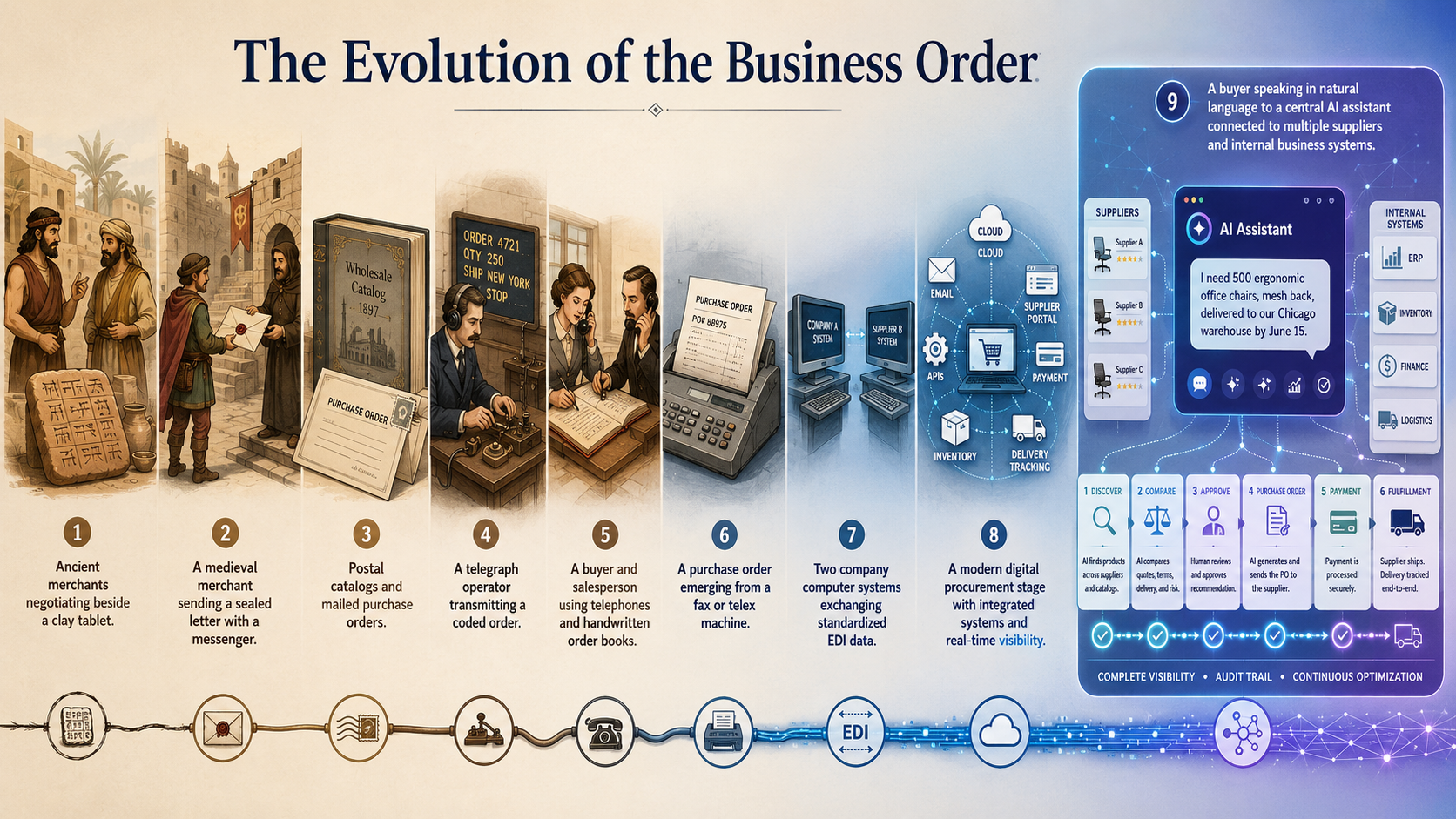
From Clay Tablets to AI Agents: The Evolution of the Business Order
Business ordering has evolved from face-to-face negotiations and handwritten records to connected digital systems that exchange transactions in real time. This article traces that progression through mail, telegraph, telephone, fax, EDI, e-commerce, and APIs—and explores the emerging shift toward AI assistants that can interpret needs, compare suppliers, coordinate approvals, and manage the transaction through fulfillment.
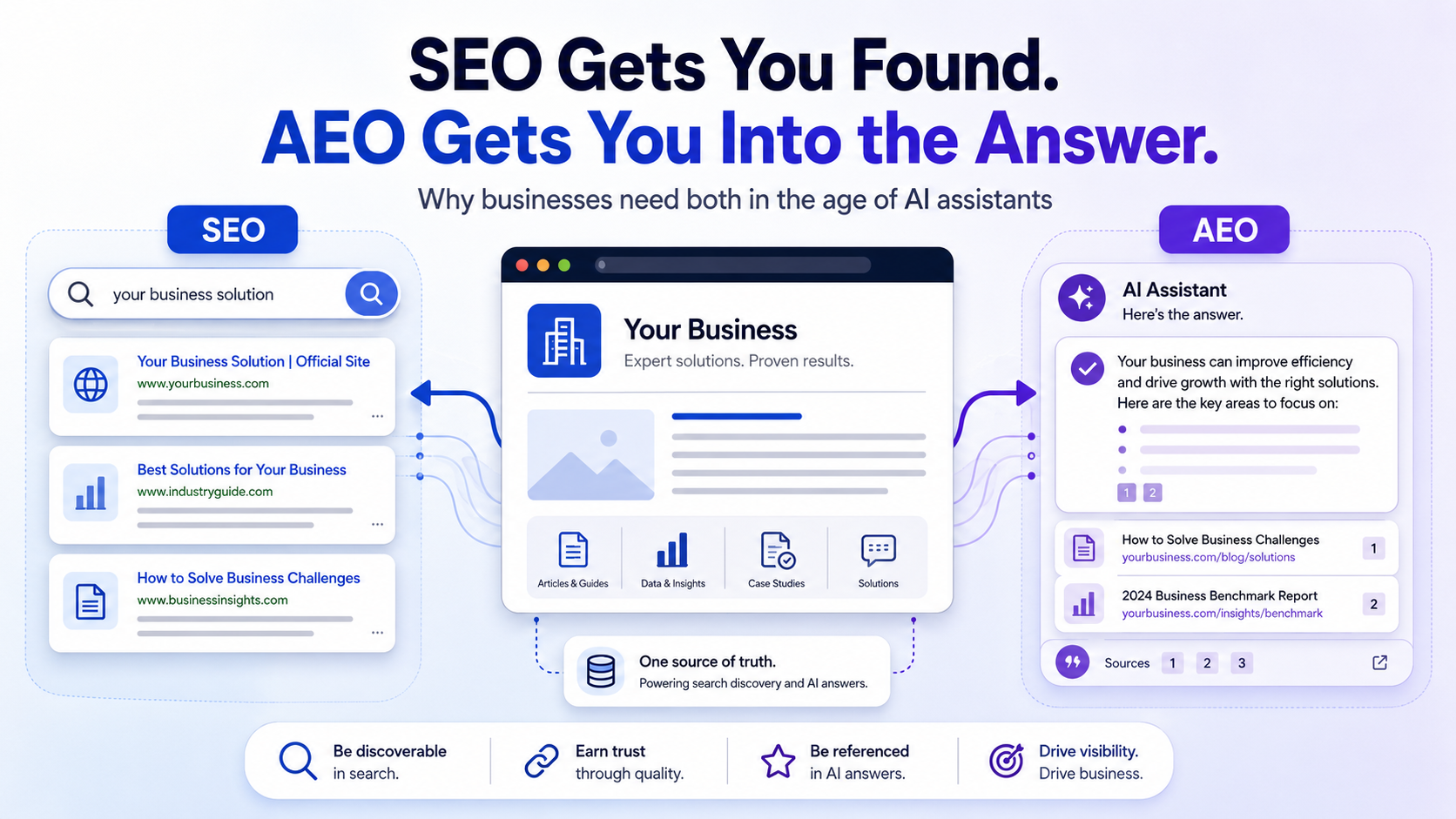
SEO Gets You Found, AEO Gets You Into the Answer
AI assistants are changing how customers discover businesses. SEO helps you get found; AEO helps ensure AI understands when your business belongs in the answer.
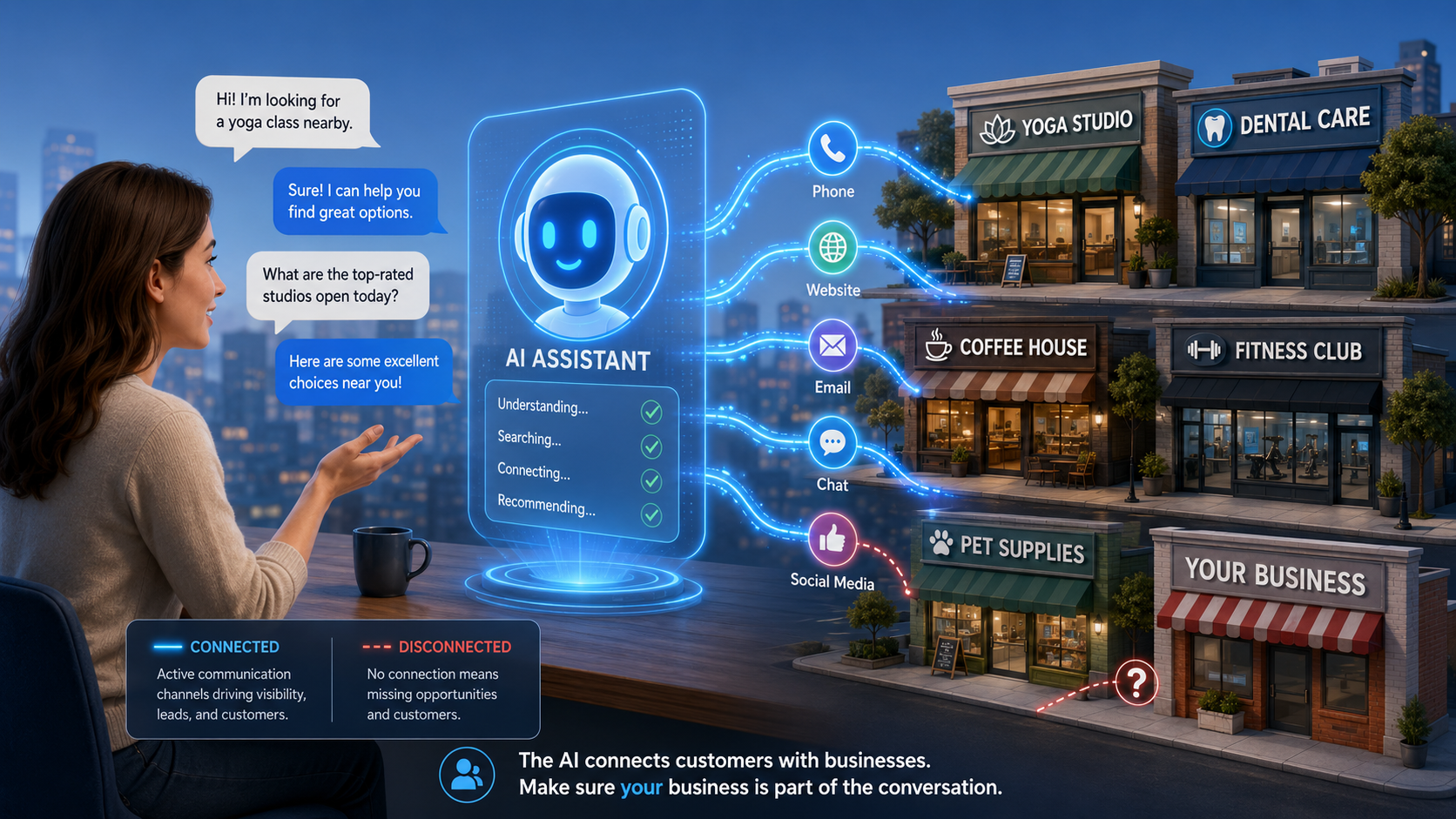
Is AI Ready for Your Business?
Your customers are already using AI to solve their problems. But does AI know how to use your business as part of the solution?
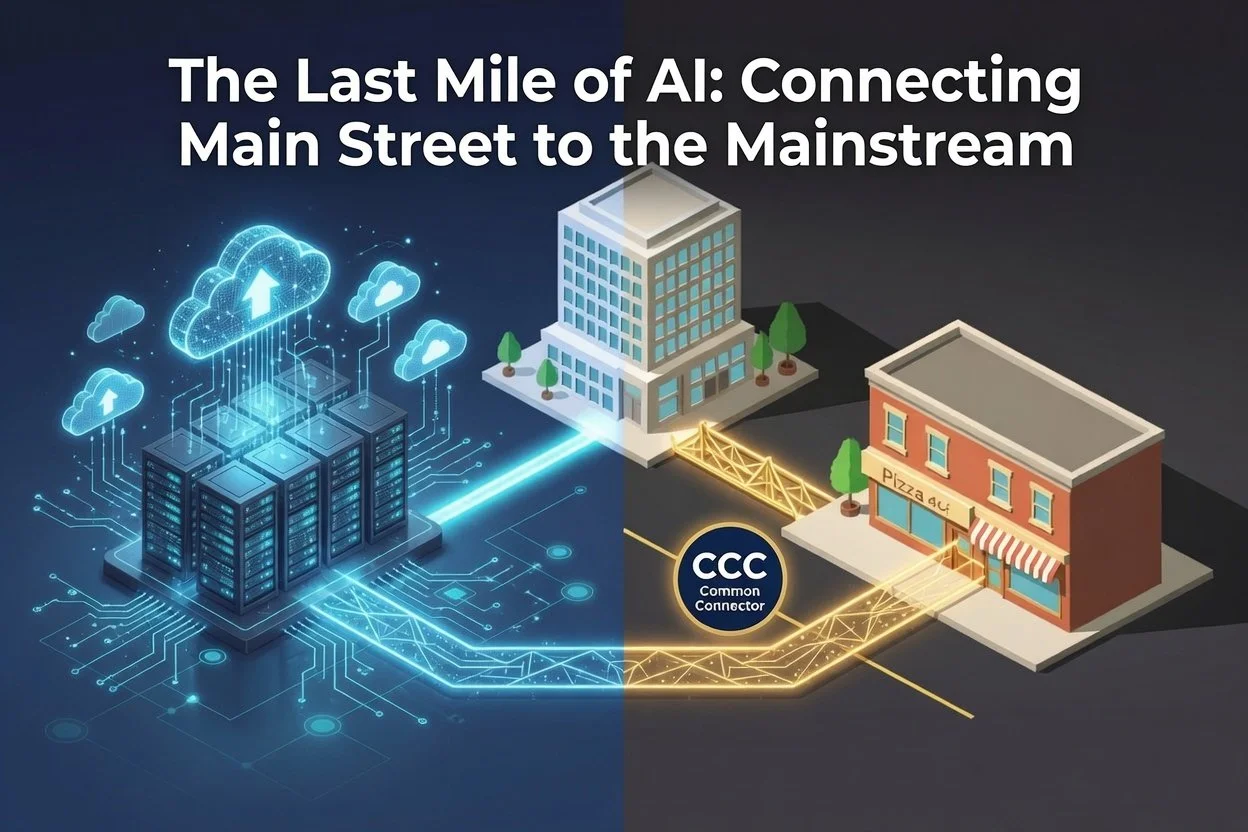
The Last Mile of AI: Connecting Main Street to the Mainstream
As more customers start with AI chatbots instead of traditional search, being found is no longer enough—businesses must also be actionable inside those conversations. Competitors that can complete orders, confirm inventory, or schedule services through an AI agent create less friction and capture a growing share of a market projected to reach hundreds of billions in the U.S. alone by 2030.
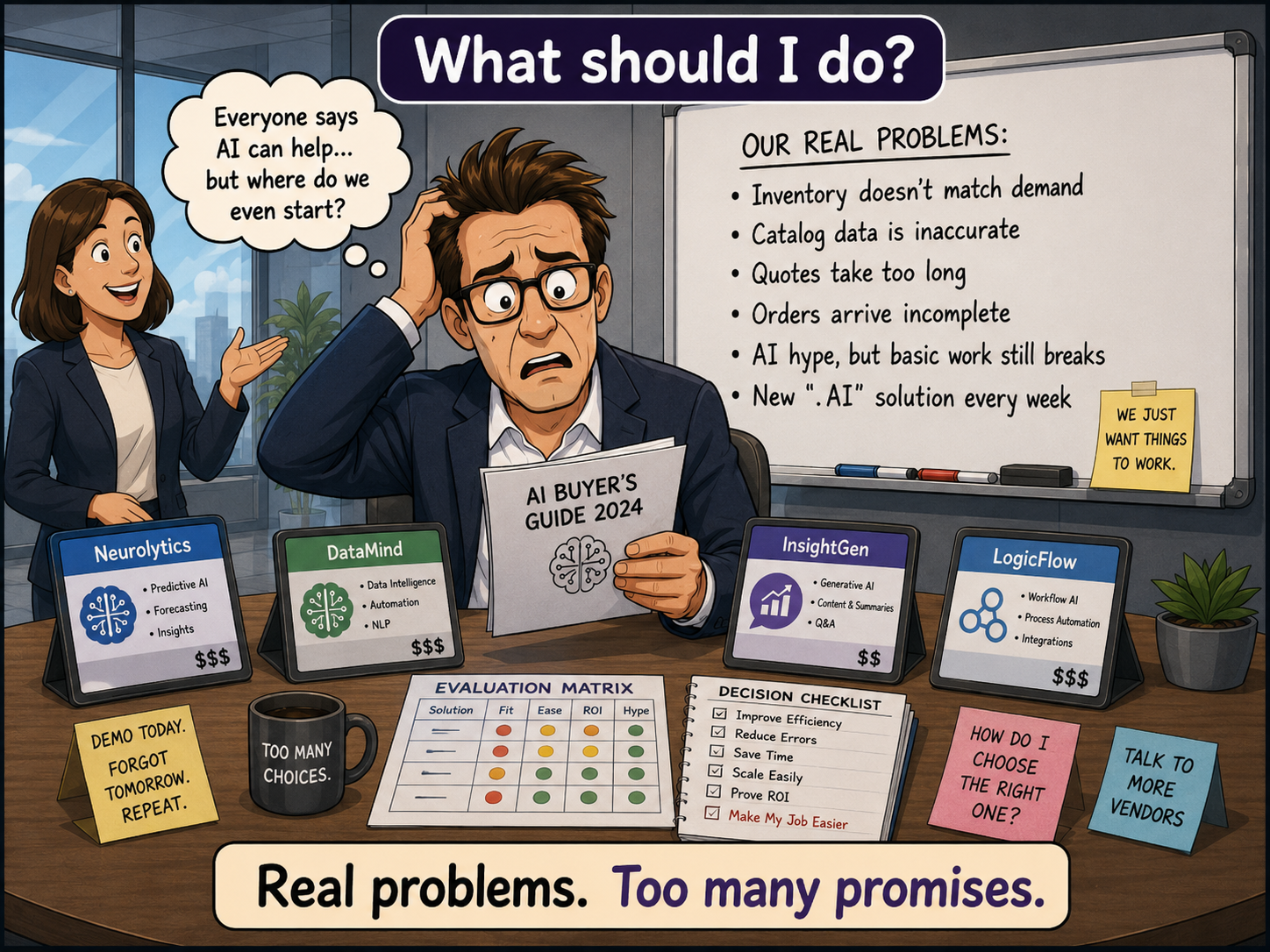
How Distributors Can Find the Right Solutions in the Age of AI
Distributors face growing operational complexity, from inventory mismatches and inaccurate product catalogs to inefficient quoting, poorly structured orders, labor shortages, and an overwhelming number of AI solutions.
The challenge is not simply choosing new technology, but determining which problems matter most, understanding how work flows through the organization, and identifying whether the real gap lies in technology, process, or adoption.
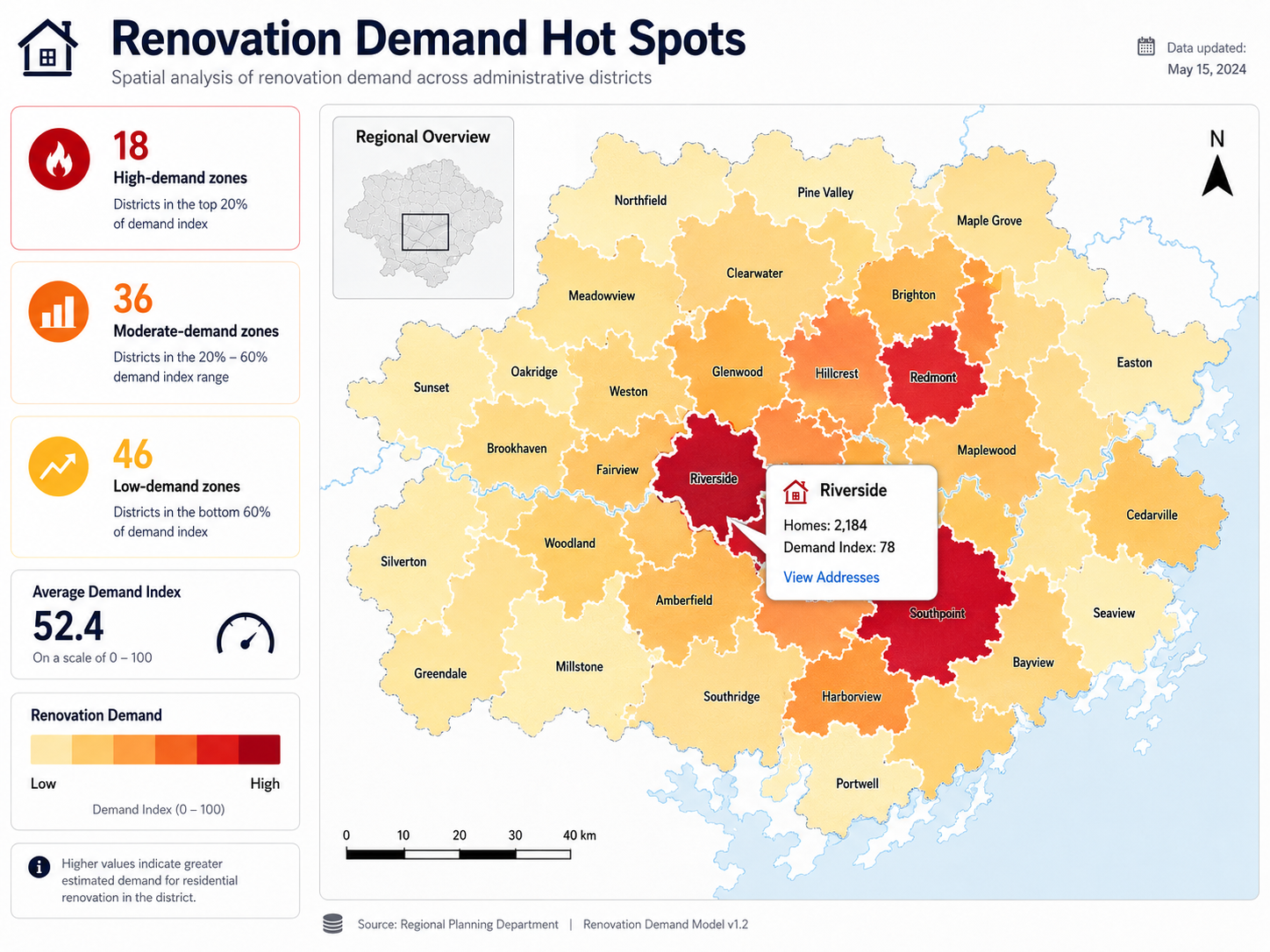
Predicting the Next Renovation Hot Spot in Your Service Area
Most contractors think renovation demand is something they have to wait for.
But what if you could identify the neighborhoods where renovation demand was likely to increase before the phone started ringing?
That may be more possible than most contractors realize.
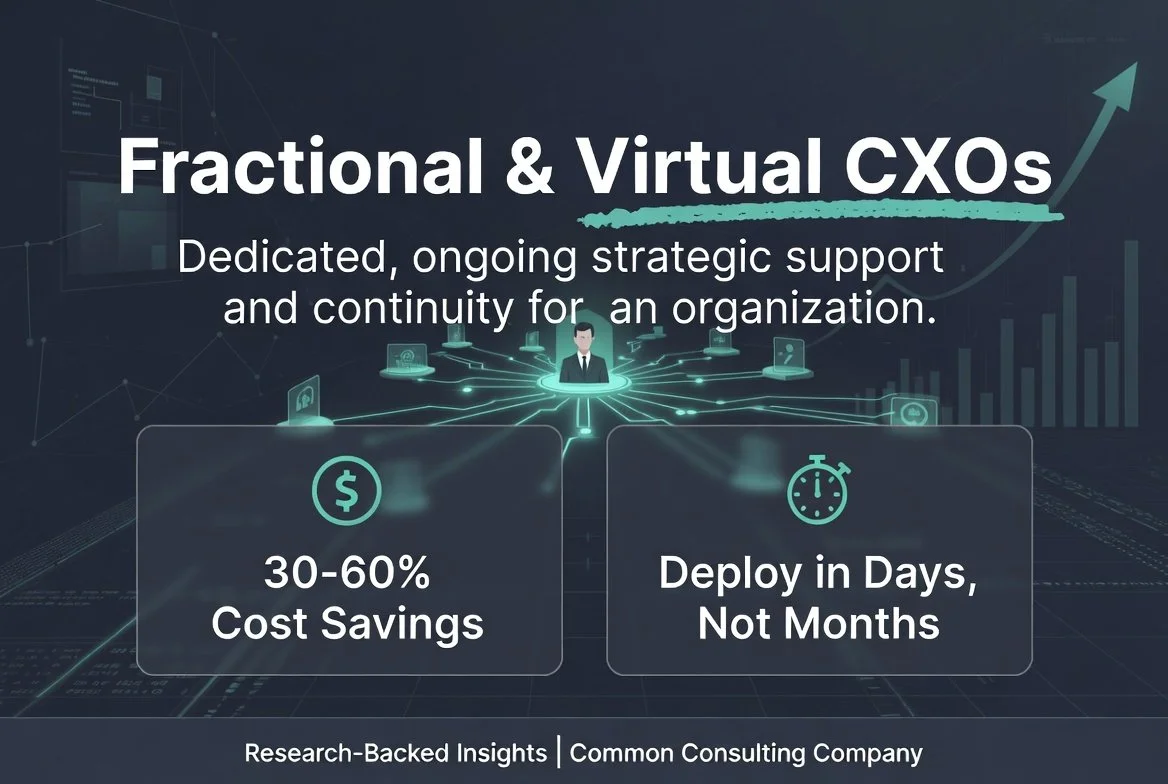
The Quantifiable Benefits of Virtual and Fractional CxO Engagements
Market data shows strong adoption of fractional and virtual CXO models by organizations seeking senior technology leadership without the cost or rigidity of full-time hires or one-off project outsourcing. This research-driven review quantifies the primary advantages—30–60% cost savings and deployment in days rather than months—delivered through dedicated, known executives who provide superior continuity and integration, outcomes that align with Common Consulting Company’s Virtual CXO engagements.
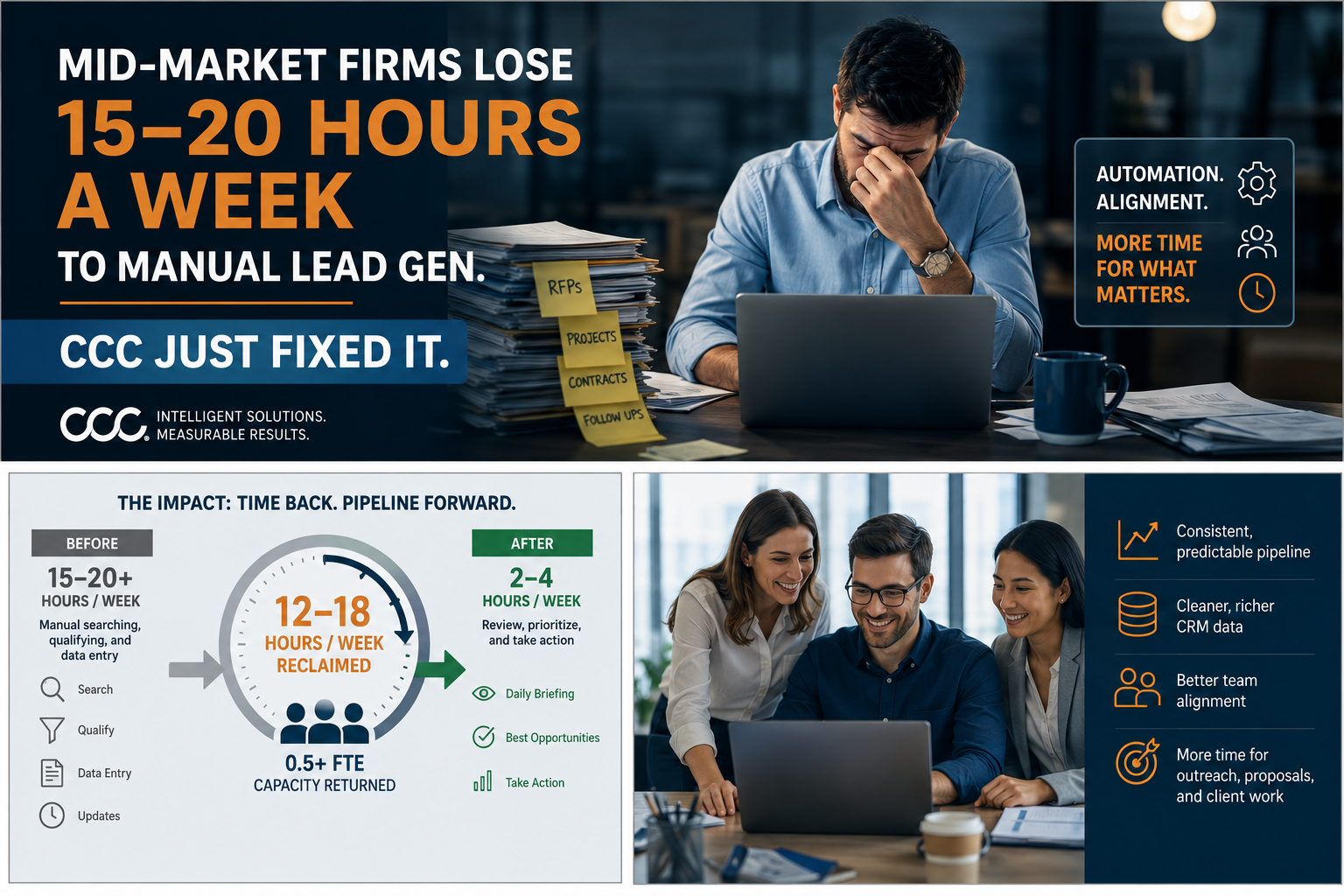
Case Study: Great Leads. Less Hassle.
A case study in how CCC aligned people, process, and technology to deliver measurable time savings and a reliable pipeline for a mid-market client.

Unlock Hidden Profits: How AI and Automation Are Transforming Mid-Size Construction and Remodeling Firms
In an industry long defined by tight margins, labor shortages, and unpredictable project timelines, forward-thinking owners of $2M–$20M construction and remodeling companies are discovering a powerful edge: strategic AI and automation. These tools aren't futuristic hype—they're delivering measurable gains in revenue, efficiency, crew performance, and customer loyalty today. By embracing them, you can reduce waste, boost operating profits, and position your firm ahead of competitors who cling to outdated methods. The question isn't whether to adopt, but how quickly—before the gap becomes insurmountable.

Have You Mastered Your Business Footwork?
In basketball, footwork determines success under pressure, yet many players attempt complex moves before mastering the basics and fail when it counts. Businesses repeat this mistake by rushing AI and automation before mastering how information and work actually flow across the organization, which only scales existing chaos. The disciplined path is to first understand current business architecture, align teams on real workflows, redesign processes for desired outcomes, and prove execution before layering technology—enabling organizations to perform at a professional level and reclaim time for what matters.

Why You Can't Find Good People and Why Re-Designing the Work Might Be the Answer
Business owners across trades and service industries keep hitting the same wall: they cannot find enough reliable, trainable workers despite higher wages and broader recruiting, because the old informal pipelines of apprenticeships, family connections, and word-of-mouth have collapsed under retirements and demographic shifts. The deeper issue is rarely a total shortage of applicants but work designed around assumptions that no longer hold—tribal knowledge, unclear roles, and processes that burn scarce skilled talent on tasks others could handle. Re-designing the work starts by mapping business architecture to define actual tasks, separate skilled from support activities, convert experience into repeatable checklists and training, build onboarding for inevitable turnover, and apply technology to protect expertise while cutting waste and rework. Companies that treat labor as a system to engineer rather than a hiring problem to solve consistently convert available talent into productive capacity and reclaim leadership time for what matters most.
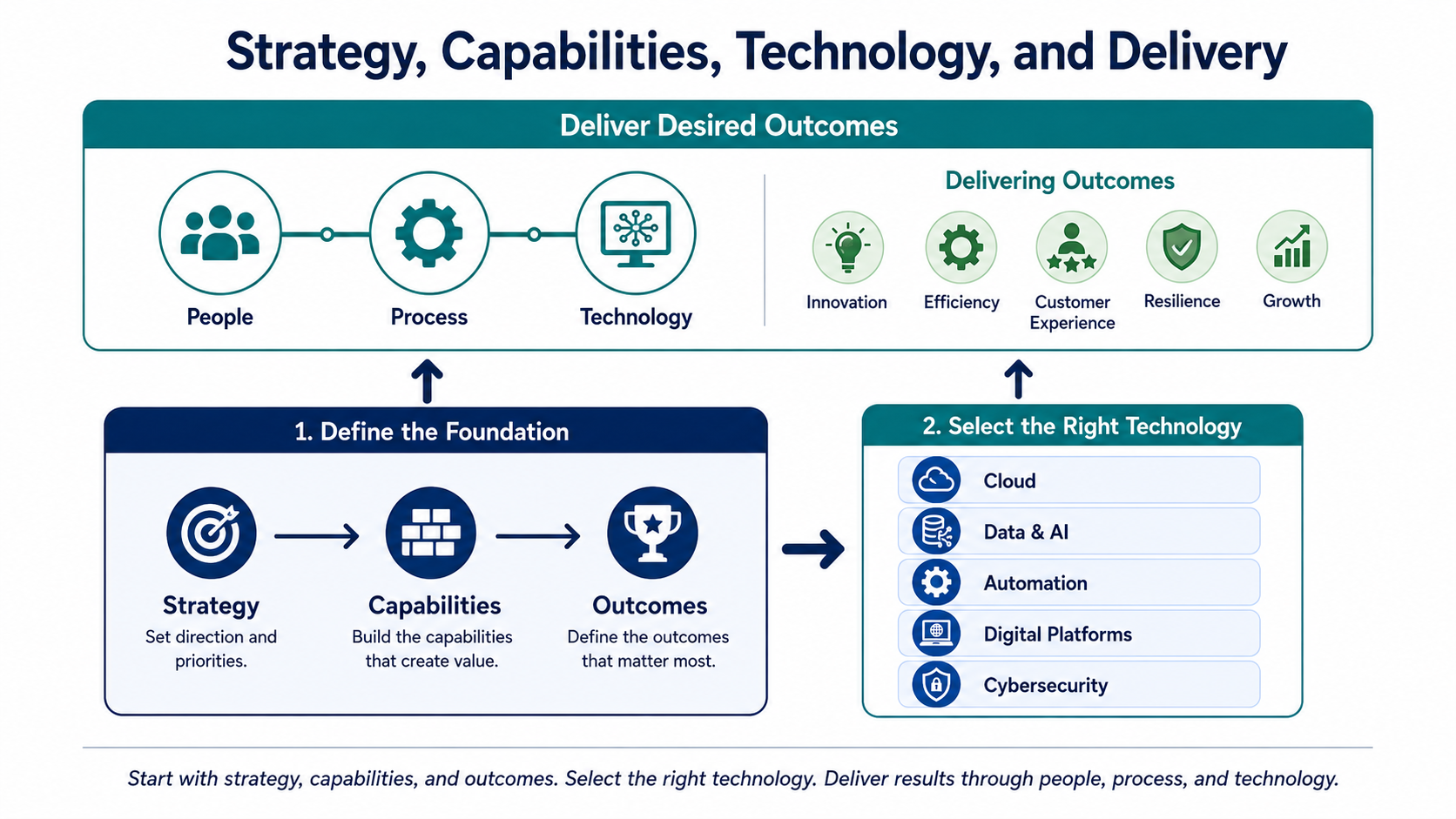
Achieving More with AI Doesn’t Start Where You Think It Does
Leaders often believe achieving more with AI starts with selecting tools or platforms, yet the bigger risk is the fear and uncertainty spreading through teams when even doctors and engineers question whether their complex roles will survive. Without clear communication of strategy, goals, and each person’s role in the transformation, employees fill the silence with their own concerns, eroding trust and momentum. True AI leadership begins by defining the desired end state, rallying the team around specific outcomes, and setting guardrails for how technology will be applied—then choosing the right tools to support that vision. Organizations that lead with clarity and purpose rather than tool selection turn AI into a consistent force multiplier that delivers more with less while strengthening direction and confidence.
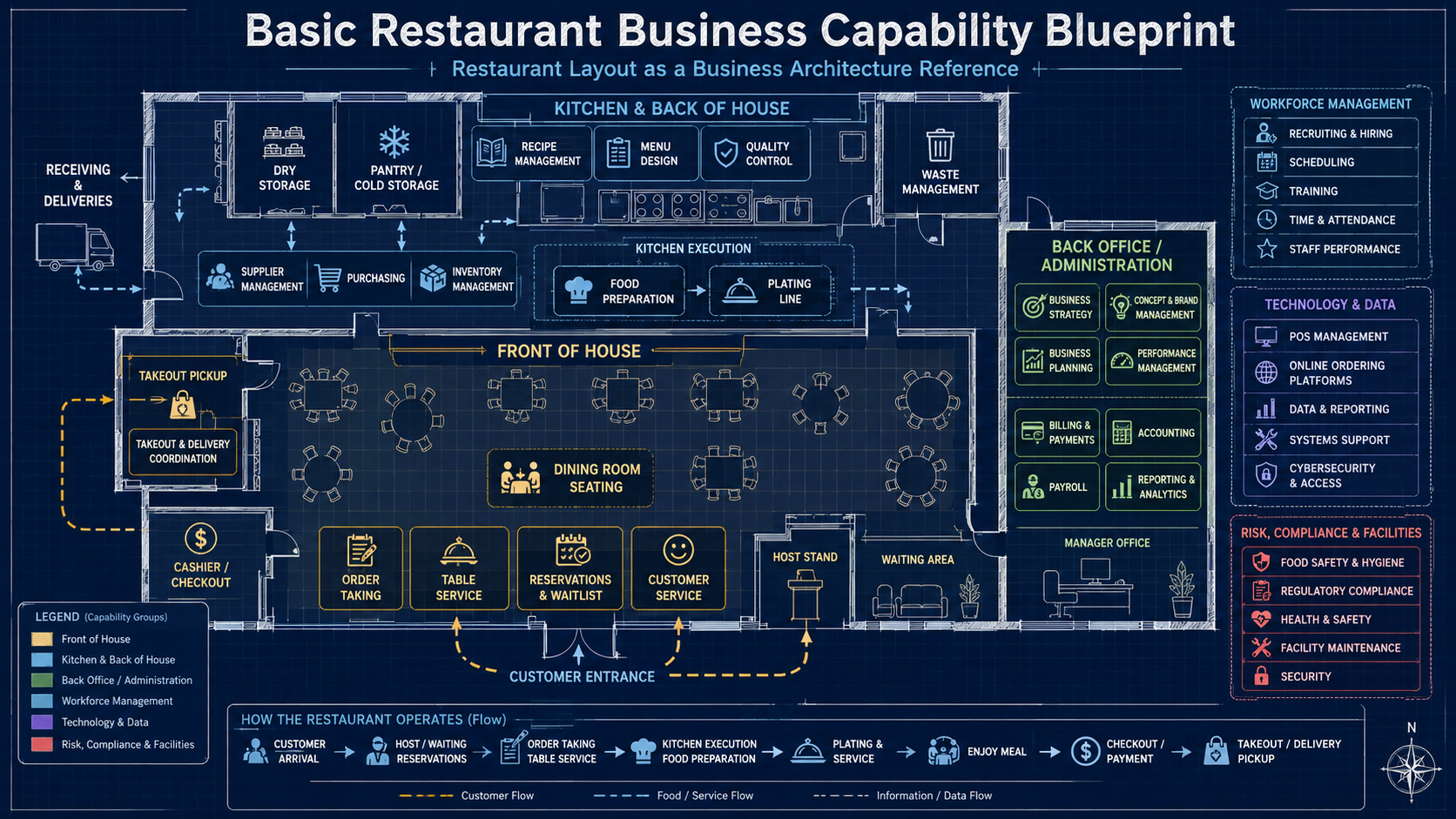
Enterprise Architecture as an Approach to Anything
nterprise Architecture is typically seen as a technical practice for aligning business strategy with technology, yet its core methods—especially the Zachman framework’s structured interrogatives (What, How, Who, When, Where, Why) and disciplined modeling—provide a highly transferable lens for analyzing and solving almost any problem. By systematically cataloging motivations, actors, processes, data, locations, and events at progressively detailed levels, this approach uncovers hidden requirements, reveals connections between people and work, reduces blind spots, and clarifies whether and how technology should support the desired outcome. Whether applied to designing a ride-sharing platform or opening a restaurant, it transforms ambiguous challenges into clear, shareable architectures that improve decision-making and execution. Leaders and teams who adopt this structured thinking gain sharper insight and confidence when decomposing complex problems, even in non-technical domains.