
Learn with CCC
Practical insights, fresh research, relevant case studies, and hard-won lessons from the work we do with leaders and organizations
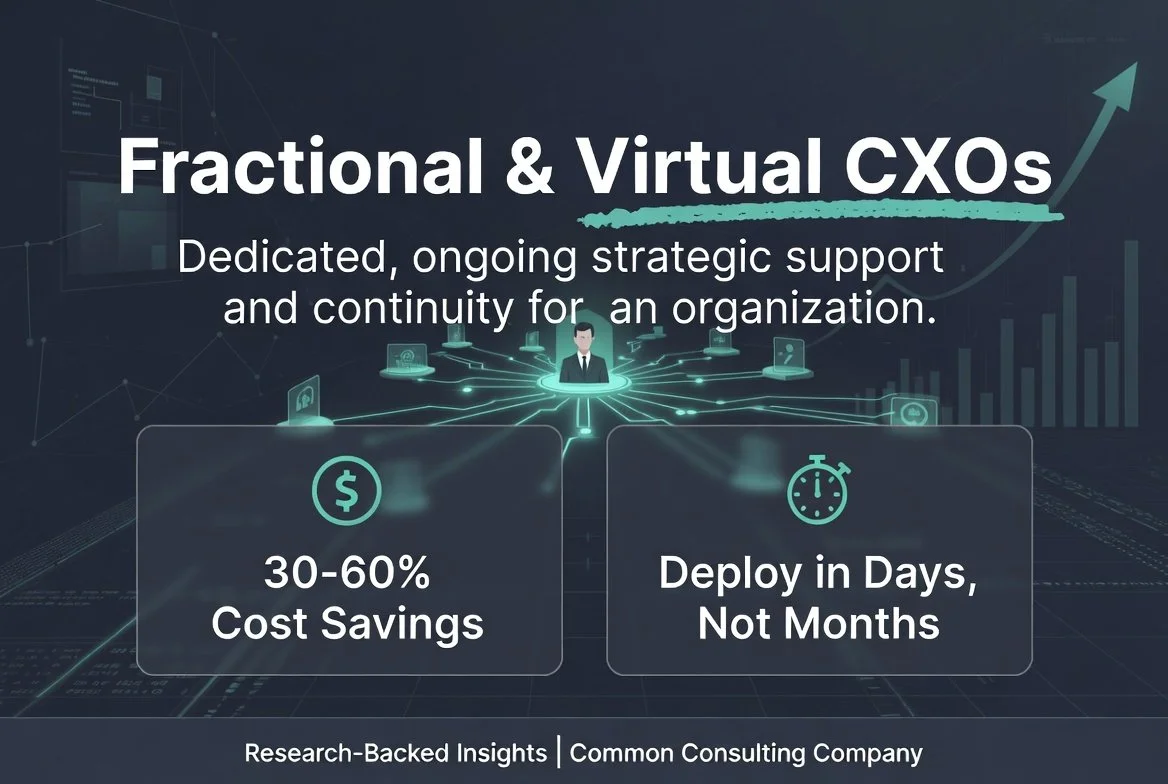
The Quantifiable Benefits of Virtual and Fractional CxO Engagements
Market data shows strong adoption of fractional and virtual CXO models by organizations seeking senior technology leadership without the cost or rigidity of full-time hires or one-off project outsourcing. This research-driven review quantifies the primary advantages—30–60% cost savings and deployment in days rather than months—delivered through dedicated, known executives who provide superior continuity and integration, outcomes that align with Common Consulting Company’s Virtual CXO engagements.

Why You Can't Find Good People and Why Re-Designing the Work Might Be the Answer
Business owners across trades and service industries keep hitting the same wall: they cannot find enough reliable, trainable workers despite higher wages and broader recruiting, because the old informal pipelines of apprenticeships, family connections, and word-of-mouth have collapsed under retirements and demographic shifts. The deeper issue is rarely a total shortage of applicants but work designed around assumptions that no longer hold—tribal knowledge, unclear roles, and processes that burn scarce skilled talent on tasks others could handle. Re-designing the work starts by mapping business architecture to define actual tasks, separate skilled from support activities, convert experience into repeatable checklists and training, build onboarding for inevitable turnover, and apply technology to protect expertise while cutting waste and rework. Companies that treat labor as a system to engineer rather than a hiring problem to solve consistently convert available talent into productive capacity and reclaim leadership time for what matters most.
Achieving More with AI Doesn’t Start Where You Think It Does
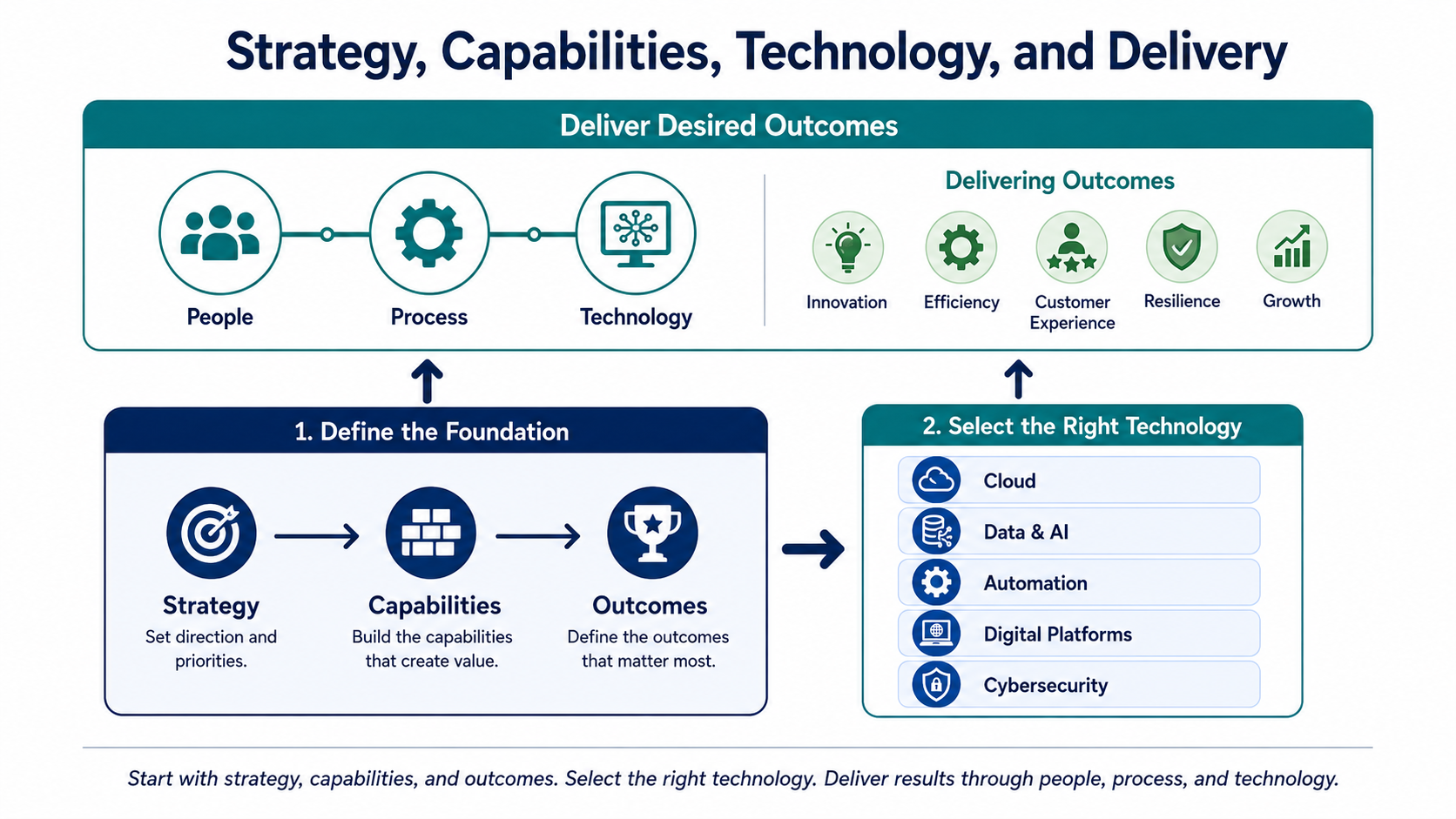
Leaders often believe achieving more with AI starts with selecting tools or platforms, yet the bigger risk is the fear and uncertainty spreading through teams when even doctors and engineers question whether their complex roles will survive. Without clear communication of strategy, goals, and each person’s role in the transformation, employees fill the silence with their own concerns, eroding trust and momentum. True AI leadership begins by defining the desired end state, rallying the team around specific outcomes, and setting guardrails for how technology will be applied—then choosing the right tools to support that vision. Organizations that lead with clarity and purpose rather than tool selection turn AI into a consistent force multiplier that delivers more with less while strengthening direction and confidence.
Enterprise Architecture as an Approach to Anything
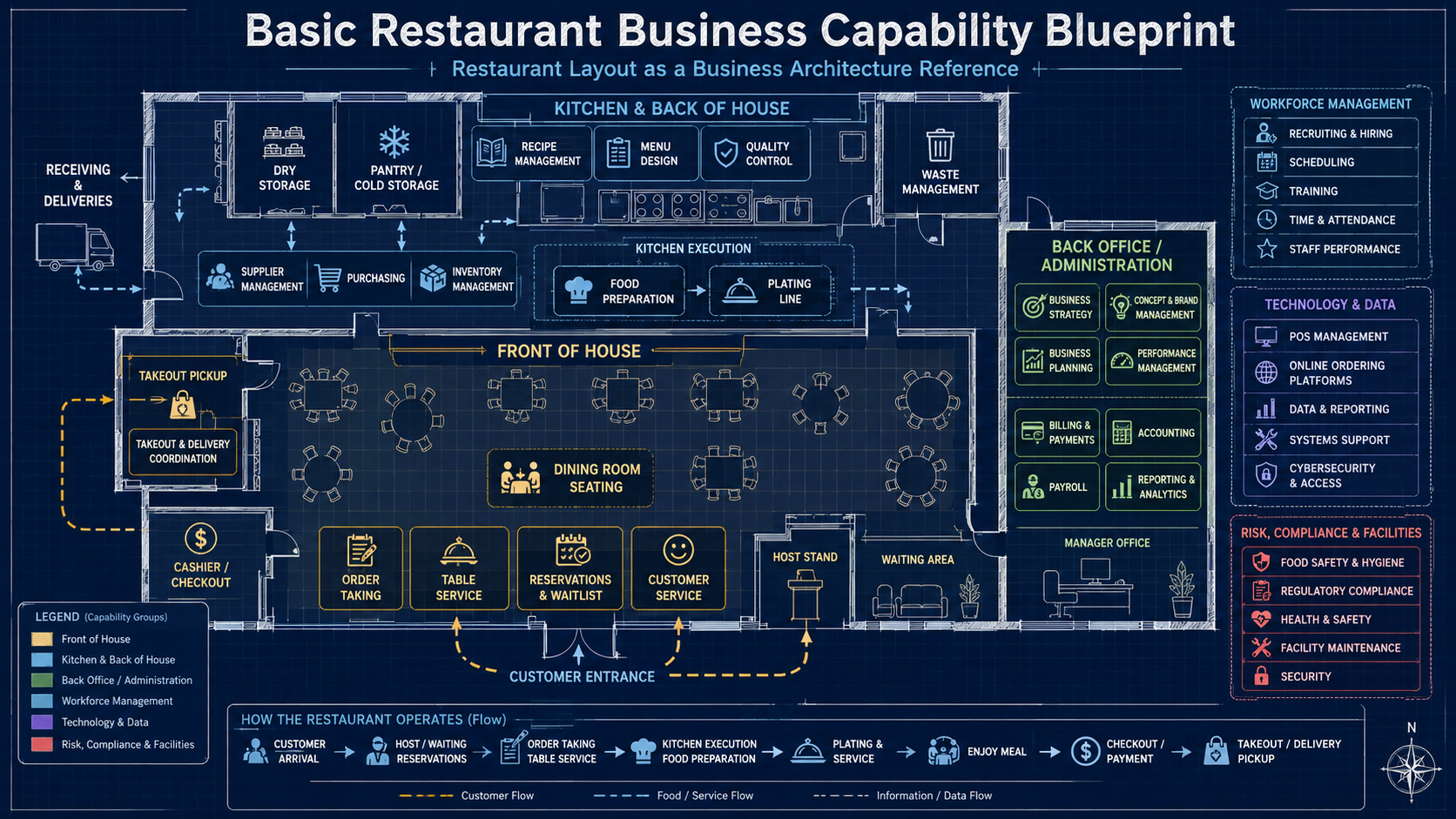
nterprise Architecture is typically seen as a technical practice for aligning business strategy with technology, yet its core methods—especially the Zachman framework’s structured interrogatives (What, How, Who, When, Where, Why) and disciplined modeling—provide a highly transferable lens for analyzing and solving almost any problem. By systematically cataloging motivations, actors, processes, data, locations, and events at progressively detailed levels, this approach uncovers hidden requirements, reveals connections between people and work, reduces blind spots, and clarifies whether and how technology should support the desired outcome. Whether applied to designing a ride-sharing platform or opening a restaurant, it transforms ambiguous challenges into clear, shareable architectures that improve decision-making and execution. Leaders and teams who adopt this structured thinking gain sharper insight and confidence when decomposing complex problems, even in non-technical domains.